Assisted Living vs. Staying at Home: Which Is Right for You?
Business Name: BeeHive Homes of Lamesa TX
Address: 101 N 27th St, Lamesa, TX 79331
Phone: (806) 452-5883
BeeHive Homes of Lamesa
Beehive Homes of Lamesa TX assisted living care is ideal for those who value their independence but require help with some of the activities of daily living. Residents enjoy 24-hour support, private bedrooms with baths, medication monitoring, home-cooked meals, housekeeping and laundry services, social activities and outings, and daily physical and mental exercise opportunities. Beehive Homes memory care services accommodates the growing number of seniors affected by memory loss and dementia. Beehive Homes offers respite (short-term) care for your loved one should the need arise. Whether help is needed after a surgery or illness, for vacation coverage, or just a break from the routine, respite care provides you peace of mind for any length of stay.
101 N 27th St, Lamesa, TX 79331
Business Hours
The inquiry seems sensible, yet it typically lands with more weight than people expect. It is hardly ever practically where somebody will sleep at night. It is about safety, dignity, routines, cash, family bandwidth, and the kind of assistance a person really needs versus the aid they hope they will certainly never need. I have actually seen households invest months circling this choice, attempting to safeguard a parent's independence while silently worrying about falls, missed medicines, lonely afternoons, or a fridge that is full but unused.
Assisted living and staying at home can both be right choices. The far better inquiry is not which alternative seems better theoretically, however which one fits the person's the real world. That indicates checking out health, home format, social requirements, financial resources, and the strain that caregiving is currently placing on every person involved.
What assisted living truly offers
Many individuals listen to assisted living and image a place that takes over a person's life. That is not generally how it functions. Excellent assisted living neighborhoods are created for older grownups who wish to maintain as much independence as feasible while obtaining assist with everyday tasks they no longer want to manage alone.
That help often consists of showering, clothing, medication pointers, meals, housekeeping, transport, and some degree of guidance. The details differ extensively from one community to another, which is why looking for assisted living near me is only the very first step. The real work follows that, when you start asking what sort of assistance is in fact included and just how the area handles changing requirements over time.
The best assisted living areas have a rhythm to them. Homeowners can pick when to stand up, where senior care to consume, whether to sign up with an activity, and just how much structure they desire in a day. For a person who has actually been isolated at home, that transform alone can be extensive. I have seen people that had quit speaking a lot at home end up being extra animated after a couple of weeks in a neighborhood dining-room or exercise class. Not due to the fact that the setting is magical, but because it brings back contact, routine, and a little momentum.
Still, assisted living is not a clinical facility. If somebody needs complicated nursing care, constant skilled treatment, or close supervision for sophisticated dementia, the fit might not be right. That distinction issues, because households sometimes think that moving into senior living addresses every trouble. It does not. It fixes some troubles very well and leaves others for a different level of care.
What staying at home can do well
There is a factor a lot of older adults intend to remain in their very own homes. Home holds memory. It holds practices, favorite chairs, acquainted sunlight, and the comfort of recognizing where everything is. For someone with convenient requirements, staying at home can preserve a great deal of independence and decrease the psychological interruption that comes with a move.
If the home is accessible, the person is still consistent on their feet, and there is trustworthy assistance close by, aging in place can function perfectly. A solid setup often includes meal help, transport, medication management, housekeeping, and periodic senior care assistance. In some homes, family members provide a lot of that assistance. In others, home care aides load the gaps.
The difficulty is that home seldom remains static. An individual might begin with aid for groceries and laundry, after that require help after an autumn, after that need everyday oversight after a hospitalization. What functioned 6 months ago can become breakable really quickly. That is where families can get caught unsuspecting. They think they are managing penalty since the calendar looks workable, but they do not discover the build-up of small troubles, the missed costs, the forgotten consultations, the repeated near-falls, the unopened mail, or the meals skipped because cooking seems like too much.
Staying in the house can be the ideal selection, but only if the support system is straightforward about what it can sustain.
The clearest difference is not convenience, it is coverage
Comfort matters, obviously. Yet the more useful distinction in between assisted living and remaining at home is insurance coverage. In your home, the individual may have stretches of total self-reliance, which appears suitable up until something happens at 7:00 p.m. On a Saturday and no one exists. In assisted living, aid is typically nearby and regimens are constructed around the demands of older adults, not around a household's luck or availability.
That does not make assisted living immediately much better. It makes it more predictable. For family members handling dementia, drops threat, or medication complication, predictability can matter more than privacy. If somebody has actually begun roaming, failing to remember the stove, or repeating the very same question all mid-day, a home setup can come to be vulnerable very quickly, even with committed family members support.
On the other hand, if an individual is still very capable and only needs intermittent aid, a move to assisted living might feel premature. Some older adults do better with a couple of hours of home assistance than with a major relocation. The very best option is usually the one that matches the real pattern of demand, not the worst-case fear.
Money transforms the discussion much faster than the majority of households expect
Finances are frequently the component individuals stay clear of up until completion, then wish they had gone over earlier. Assisted living has a month-to-month cost that can be much easier to understand than the jumble of home expenditures, yet that does not automatically make it less costly. At home, households may undervalue the collective price of part-time aides, food shipment, transport, home alterations, medications, autumn avoidance devices, and shed job hours from caregiving.
The math depends upon just how much aid is needed. A person that only requires a couple of hours of support each week might invest less staying home. A person who requires daily aid, over night protection, or repeated emergency situation backup can see the expense increase quick. There is likewise a psychological cost to household caretakers that extend themselves too thin. That pressure does not constantly show up on a spreadsheet, however it is real.
I have actually talked to adult youngsters that assumed home care would certainly be much more affordable, after that uncovered they were paying for separate items that never quite added up to a steady plan. I have additionally seen family members select assisted living and later understand they had actually paid for comfort as much as for services. That is not a poor thing. It simply needs to be acknowledged honestly.
When individuals contrast senior living options, they should request for a complete picture of regular monthly fees, what is included, what prices added, and how rates transform if care requirements increase. It is very easy to be seduced by a base rate that looks manageable and miss out on the attachments that shape the genuine total.
Safety is seldom concerning one remarkable event
Families often make this decision after an autumn, a medication error, or a frightening night when a person could not be gotten to. Yet safety problems are normally constructed from smaller signals that appear long before the dilemma. A person may have swellings from bumping into furniture, leave burners on, miss refills, or become unstable in the shower. None of those issues alone may force an adjustment, but together they create a pattern.
Assisted living can minimize several of that danger because the atmosphere is developed for aging bodies. Hallways are commonly simpler to navigate, shower rooms are extra easily accessible, meals are regular, and staff are nearby. That said, no setup removes danger entirely. Individuals still fall, still get sick, and still have poor days.
At home, safety depends heavily on the format and on how much support is present. A one-story house with grab bars, excellent illumination, a walk-in shower, and sufficient family or paid aid can be a good setup. A two-story home with steep stairways, narrow washrooms, and long periods alone is another matter entirely.
If the conversation has actually reached the point where someone is asking whether senior care near me can protect against one more crisis, that is usually an indication to assess the environment, not simply the person. Home can be risk-free, but just if it is adjusted to the individual's altering abilities.
Independence suggests various things to various people
This component of the discussion commonly gets streamlined, but it needs to not be. A single person specifies self-reliance as remaining in the family home regardless of what. An additional defines it as not depending upon their children for every dish, trip, and prescription. Both are legitimate.
Some older adults in fact acquire independence in assisted living due to the fact that they no longer require to wait for a little girl to show up after job or a kid to visit on weekend breaks. They can make choices inside a secure routine, which can really feel extra independent than being "alone" at home however reliant in technique. Others feel greatly independent when they can keep their very own residence, also if that implies accepting outdoors help.
The healthiest choice commonly comes when households stop dealing with freedom as an all-or-nothing idea. A person can live in the house and still require substantial assistance. An individual can move right into assisted living and still make the majority of their very own daily selections. The problem is not whether help exists. The concern is whether the individual's life still feels like their own.
The covert problem is normally caretaker fatigue
I have hardly ever seen this choice depend upon one clinical reality alone. More often, it boils down to exhaustion. A spouse is tired. A grown-up child is commuting to and fro. Someone has missed out on way too much job. The family has become the back-up plan for everything.
Caregiver exhaustion is just one of the clearest signs that remaining at home may no more be sustainable without outside aid. It does not imply relative have fallen short. It means the circumstance has grown beyond what love alone can lug. That is an unpleasant fact, particularly in households that have constantly prided themselves on taking care of their own.
Respite care can purchase time and quality when points doubt. A temporary stay in a care setup or a couple of weeks of additional assistance in your home can reveal the family members what the following stage may need. Occasionally that breathing room exposes that home is still workable with more support. In some cases it makes the case for assisted living unmistakable. Regardless, respite care can keep the choice from being made in a panic.
How to analyze the decision without obtaining stuck
The ideal choices are generally much more sensible than remarkable. Family members do far better when they take a look at actual routines instead of abstract preferences. What does a normal morning look like? Can the person wake up securely? Can they take care of tablets, meals, and hygiene? Are they lonely adequate to matter yet not nearly enough to admit? Are relative giving care since it is sustainable, or due to the fact that no one has actually said aloud that it is too much?
A useful method to arrange this out is to focus on where the issues collection. If the concerns are mostly social, light physical assistance needs, and dish prep, remaining at home with services could work well. If the problems involve straying, repeated drops, unsafe cooking, missed medicines, or increasing complication, assisted living might supply a much better degree of structure.
There is additionally the issue of timing. Lots of family members wait also long since the older grownup states no initially and the family wants to appreciate that. Regard issues, yet so does realistic look. An individual that is still able to join the decision has even more choices than someone who is forced into a step after a hospitalization. The earlier the discussion starts, the more options stay on the table.
What to ask when you tour a community or interview home care
Whether you are comparing assisted living areas or working with assistance at home, the information matter greater than the sales pitch. Ask how care is managed daily, that responds if a person declines, how dishes are taken care of, and what happens if a resident's needs raise. If you are considering assisted living near me, visit greater than when if you can. A community can feel extremely various throughout a quiet weekday early morning than it does throughout lunch or late afternoon.
At home, ask the exact same sort of functional questions. That will cover weekends? What happens if an assistant calls out? Just how will medicines be arranged? Who checks on the individual after a loss? If relative are actioning in, how much is sensible prior to burnout starts to show?

You do not need a perfect response to every scenario, yet you do require sufficient structure to understand the plan can make it through a bad week.
A basic contrast in simple language
If you remove the feeling, the selection typically resembles this: assisted living offers integrated support, regular, and social call, while staying at home offers experience, personal privacy, and the opportunity of reduced cost if requirements are modest. Assisted living can be a much better fit when daily aid is becoming continuous or hazardous to manage alone. Staying at home can be a better fit when the individual is steady, the home can be adjusted, and the assistance network is solid sufficient to last.
Neither alternative is widely better. The right answer depends upon the person's needs today, not the optimal version of what tomorrow may look like.
The choice is simpler when you match the readying to the season of life
There are periods when home is plainly the right place. There are additionally periods when the burden of staying home outweighs the convenience of it. Some family members arrive at assisted living after a long and careful procedure, and the relocation feels like alleviation. Others make the option unwillingly, then uncover that the individual works out in better than any individual anticipated. A few proceed in the house for as long as possible and do well due to the fact that they constructed a solid care network early.
The hardest situations are the ones where everybody is wishing the existing setup will certainly hold, although the indication are already noticeable. That is usually where a clear-eyed discussion saves one of the most pain later.
If you are evaluating assisted living versus remaining at home, take note of what is occurring on common days. Not the very best day. Not the emergency day. The common one. That is where the fact usually lives.
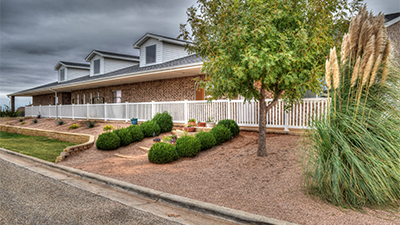
For some family members, the answer will be a relocation into senior living. For others, it will be home with a stronger care plan, perhaps with aid from senior care solutions, drug assistance, or scheduled respite care so household caretakers can relax and return. The appropriate solution is the one that keeps the person safe, highly regarded, and as independent as feasible without claiming that requirements do not exist.
BeeHive Homes of Lamesa TX provides assisted living care
BeeHive Homes of Lamesa TX provides memory care services
BeeHive Homes of Lamesa TX provides respite care services
BeeHive Homes of Lamesa TX supports assistance with bathing and grooming
BeeHive Homes of Lamesa TX offers private bedrooms with private bathrooms
BeeHive Homes of Lamesa TX provides medication monitoring and documentation
BeeHive Homes of Lamesa TX serves dietitian-approved meals
BeeHive Homes of Lamesa TX provides housekeeping services
BeeHive Homes of Lamesa TX provides laundry services
BeeHive Homes of Lamesa TX offers community dining and social engagement activities
BeeHive Homes of Lamesa TX features life enrichment activities
BeeHive Homes of Lamesa TX supports personal care assistance during meals and daily routines
BeeHive Homes of Lamesa TX promotes frequent physical and mental exercise opportunities
BeeHive Homes of Lamesa TX provides a home-like residential environment
BeeHive Homes of Lamesa TX creates customized care plans as residents’ needs change
BeeHive Homes of Lamesa TX assesses individual resident care needs
BeeHive Homes of Lamesa TX accepts private pay and long-term care insurance
BeeHive Homes of Lamesa TX assists qualified veterans with Aid and Attendance benefits
BeeHive Homes of Lamesa TX encourages meaningful resident-to-staff relationships
BeeHive Homes of Lamesa TX delivers compassionate, attentive senior care focused on dignity and comfort
BeeHive Homes of Lamesa TX has a phone number of (806) 452-5883
BeeHive Homes of Lamesa TX has an address of 101 N 27th St, Lamesa, TX 79331
BeeHive Homes of Lamesa TX has a website https://beehivehomes.com/locations/lamesa/
BeeHive Homes of Lamesa TX has Google Maps listing https://maps.app.goo.gl/ta6AThYBMuuujtqr7
BeeHive Homes of Lamesa TX has Facebook page https://www.facebook.com/BeeHiveHomesLamesa
BeeHive Homes of Lamesa has an YouTube page https://www.youtube.com/@WelcomeHomeBeeHiveHomes
BeeHive Homes of Lamesa TX won Top Assisted Living Homes 2025
BeeHive Homes of Lamesa TX earned Best Customer Service Award 2024
BeeHive Homes of Lamesa TX placed 1st for Senior Living Communities 2025
People Also Ask about BeeHive Homes of Lamesa TX
What is BeeHive Homes of Lamesa Living monthly room rate?
The rate depends on the level of care that is needed. We do an initial evaluation for each potential resident to determine the level of care needed. The monthly rate is based on this evaluation. There are no hidden costs or fees
Can residents stay in BeeHive Homes until the end of their life?
Usually yes. There are exceptions, such as when there are safety issues with the resident, or they need 24 hour skilled nursing services
Do we have a nurse on staff?
No, but each BeeHive Home has a consulting Nurse available 24 – 7. if nursing services are needed, a doctor can order home health to come into the home
What are BeeHive Homes’ visiting hours?
Visiting hours are adjusted to accommodate the families and the resident’s needs… just not too early or too late
Do we have couple’s rooms available?
Yes, each home has rooms designed to accommodate couples. Please ask about the availability of these rooms
Where is BeeHive Homes of Lamesa TX located?
BeeHive Homes of Lamesa is conveniently located at 101 N 27th St, Lamesa, TX 79331. You can easily find directions on Google Maps or call at (806) 452-5883 Monday through Sunday 9:00am to 5:00pm
How can I contact BeeHive Homes of Lamesa TX?
You can contact BeeHive Homes of Lamesa by phone at: (806) 452-5883, visit their website at https://beehivehomes.com/locations/lamesa/, or connect on social media via Facebook or YouTube
Visiting the Ninth Street Park provides open space and nearby seating where residents in assisted living, memory care, senior care, elderly care, and respite care can enjoy calm outdoor time.